Hot work refers to any activity that generates flames, heat, sparks, or molten metal that can ignite combustible materials. These tasks are common in construction, manufacturing, maintenance, fabrication, and repair works. Because of the high risk of fire, explosion, burns, and toxic fumes, hot work must always be performed under strict safety controls.
What is Hot Work?
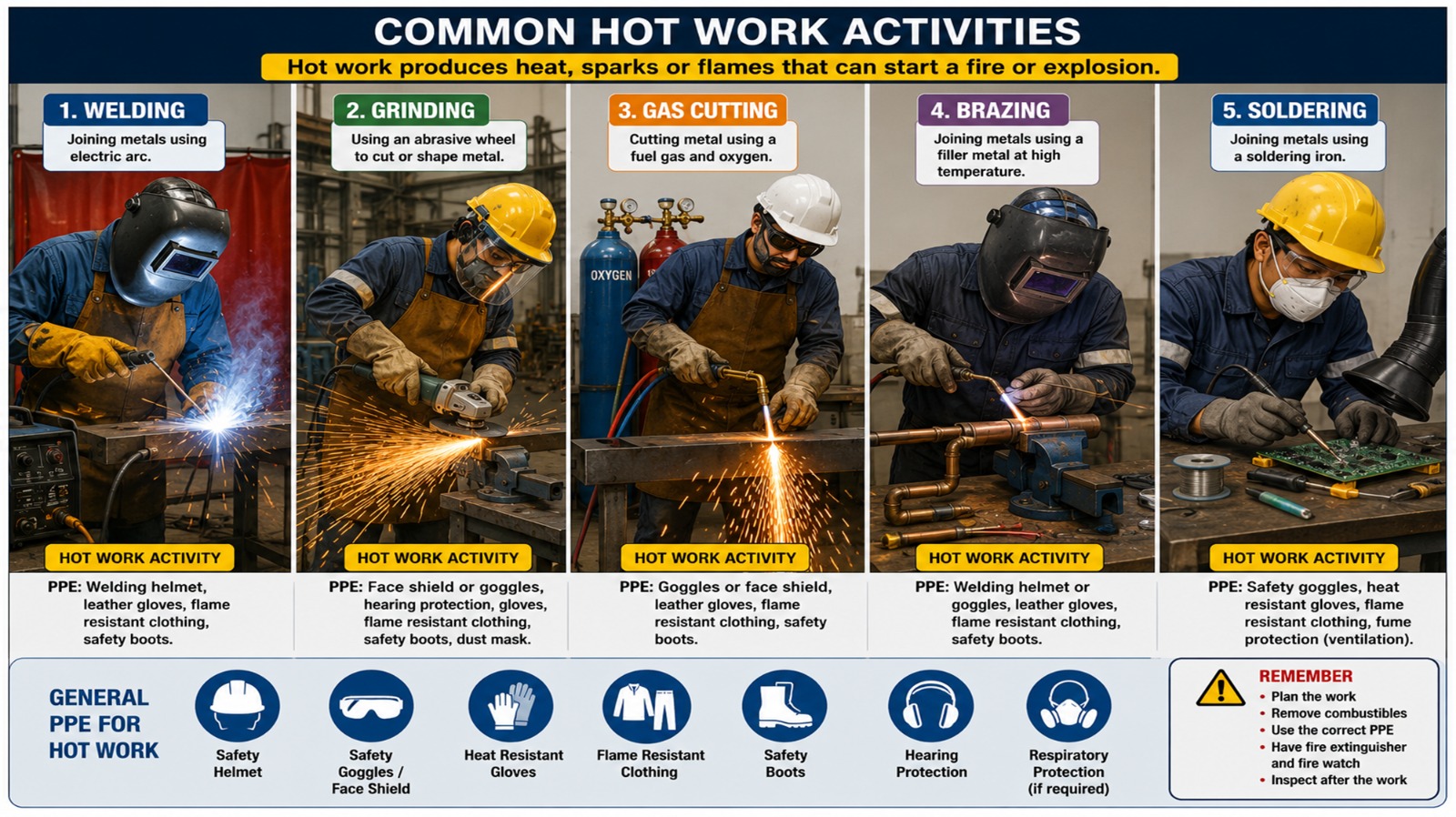
Hot work includes any operation that produces heat, sparks, or open flames capable of starting a fire or causing an explosion.
A Hot Work Permit should always be obtained before starting any hot work activity in a workplace.
Common Hot Work Activities
The most common hot work activities include:
1. Welding
Arc welding
MIG welding
TIG welding
Gas welding
Hazards
Fire
Electric shock
Eye injuries
Burns
Harmful welding fumes
2. Cutting
Oxy-acetylene cutting
Plasma cutting
Metal cutting using grinders
Hazards
Flying sparks
Fire
Explosion
Flying metal particles
Excessive heat
3. Grinding
Grinding produces thousands of sparks capable of igniting nearby combustible materials.
Hazards
Flying debris
Fire
Eye injuries
Noise exposure
Hand-arm vibration
4. Brazing
Brazing joins metals using high temperatures.
Hazards
Burns
Fire
Harmful fumes
Hot surfaces
5. Soldering
Soldering uses heated solder to join metals.
Hazards
Lead exposure
Burns
Smoke inhalation
Fire
6. Torch Heating
Used for loosening bolts, bending steel, and heating metal components.
Hazards
Fire
Explosion
Burns
Gas leaks
7. Metal Melting
Foundries and fabrication workshops often melt metals.
Hazards
Molten metal splash
Severe burns
Fire
Heat stress
Common Hot Work Hazards
Hot work can expose workers to many serious hazards, including:
- Fire
- Explosion
- Electric shock
- Burns
- Flying sparks
- Harmful fumes and gases
- Eye damage from UV and infrared radiation
- Oxygen deficiency in confined spaces
- Heat stress
- Noise exposure
- Flying particles
- Falling objects during elevated work
Precaution Measures
Before starting hot work, ensure the following precautions are implemented:
Before Work
Obtain a valid Hot Work Permit.
Conduct a Job Hazard Analysis (JHA) or Risk Assessment.
Inspect all welding and cutting equipment.
Remove combustible and flammable materials within at least 10 meters of the work area.
Provide suitable fire extinguishers.
Ensure adequate ventilation.
Barricade the work area.
Verify gas cylinders are secured upright.
Check hoses, regulators, and flashback arrestors.
During Work
- Wear the required PPE:
- Welding helmet
- Safety glasses
- Face shield
- Leather gloves
- Flame-resistant clothing
- Safety boots
- Hearing protection
- Respiratory protection when necessary
- Maintain good housekeeping.
- Assign a trained fire watch.
- Protect nearby workers using welding screens.
- Keep sparks away from combustible materials.
- Never weld on closed containers unless properly cleaned and tested.
After Work
- Inspect the work area for smoldering materials.
- Continue fire watch for at least 30 minutes (or as required by company procedure).
- Turn off gas cylinders and electrical equipment.
- Store equipment safely.
- Close the Hot Work Permit after confirming the area is safe.
Emergency Response
If an emergency occurs:
- Stop work immediately.
- Raise the alarm.
- Use the correct fire extinguisher only if it is safe to do so.
- Evacuate the area if the fire cannot be controlled.
- Call emergency responders.
- Report all incidents to supervision.
Best Practices
- Never perform hot work without authorization.
- Never work alone during hot work.
- Inspect equipment before each use.
- Maintain good ventilation.
- Keep escape routes clear.
- Ensure workers are trained and competent.
- Follow company hot work procedures and local regulations at all times.
Conclusion
Hot work is one of the leading causes of workplace fires and serious injuries. By identifying hazards, obtaining the proper Hot Work Permit, using the correct personal protective equipment (PPE), and following established safety procedures, organizations can significantly reduce the risk of accidents. Safety should always be the top priority whenever hot work is performed.