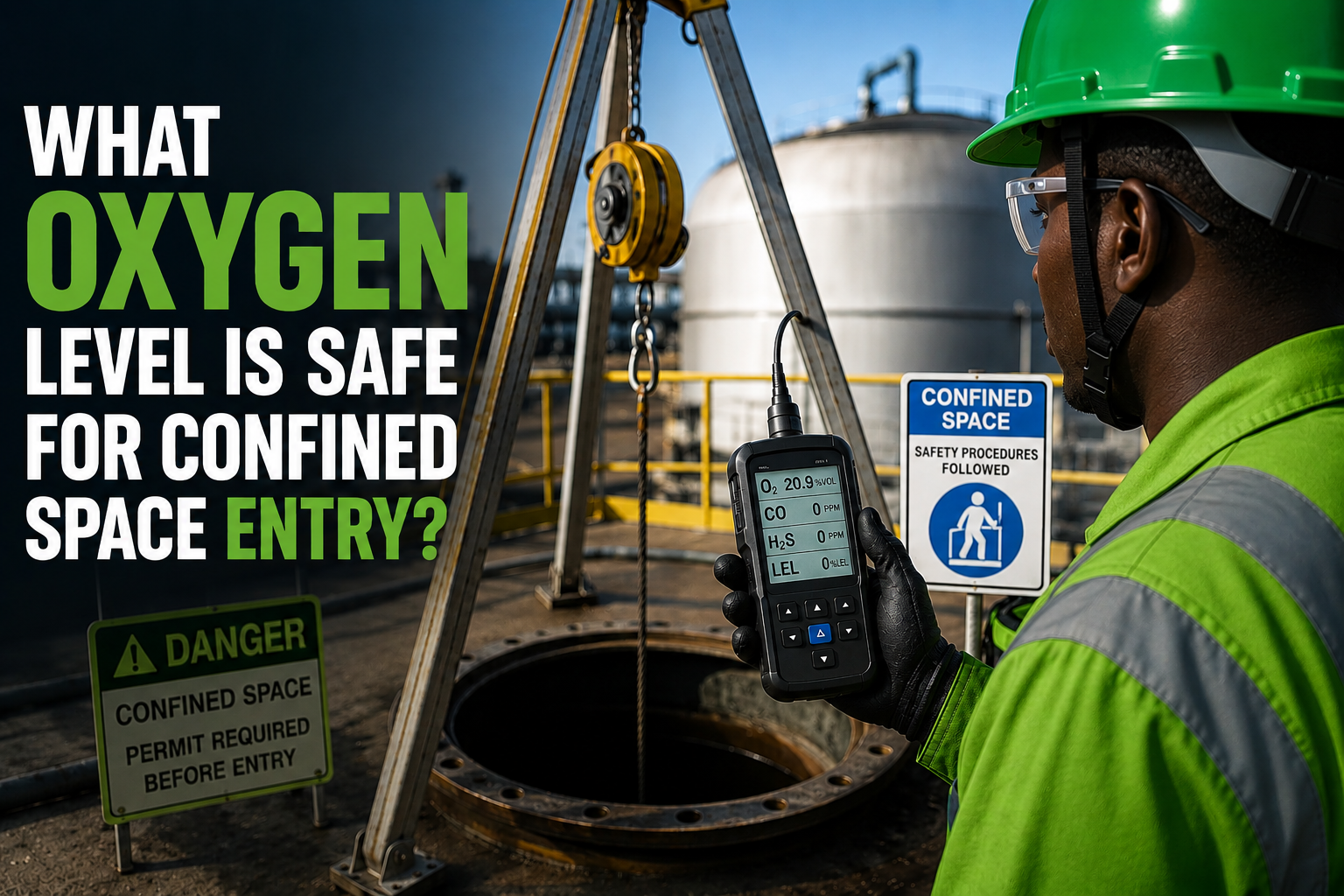
For most workplace confined spaces, the generally accepted safe oxygen range for entry is 19.5% to 23.5% oxygen by volume.
Here's what the levels mean:
• 19.5%–23.5%: Generally considered safe for oxygen concentration, provided all other confined space hazards (toxic gases, flammable atmospheres, physical hazards, etc.) have also been evaluated.
• Below 19.5%: Oxygen-deficient atmosphere. This can impair judgment, coordination, and breathing, and can quickly become life-threatening. Entry should not occur unless appropriate controls and specialized procedures are in place.
• Above 23.5%: Oxygen-enriched atmosphere. This significantly increases the risk of fire and causes many materials to ignite more easily and burn more intensely.
Before anyone enters a confined space, standard safe work practices include:
1. Testing the atmosphere with a calibrated gas monitor.
2. Testing in the proper order:
• Oxygen concentration
• Flammable gases and vapors
• Toxic contaminants
3. Continuously monitoring the atmosphere if conditions could change during entry.
4. Ensuring proper ventilation if needed.
5. Following the site's confined space entry permit and rescue procedures.
These limits are consistent with regulations and guidance from organizations such as Occupational Safety and Health Administration and National Institute for Occupational Safety and Health.
In short, the safe oxygen level for confined space entry is between 19.5% and 23.5%, assuming all other atmospheric and physical hazards have also been controlled.