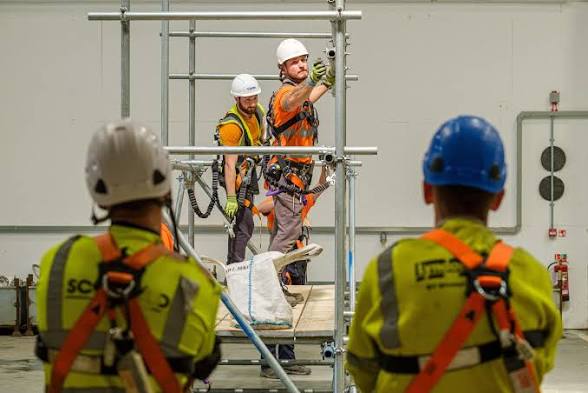
Scaffolding provides a safe working platform for construction, maintenance, and industrial activities, but only when it is properly erected, maintained, and inspected. Regular inspections help identify hazards before they lead to falls, structural failures, or other serious incidents. This guide outlines the key areas every competent person should inspect before approving a scaffold for use.
Introduction
Scaffolding plays a vital role in enabling workers to safely perform tasks at height across a wide range of industries, including construction, manufacturing, maintenance, oil and gas, and utilities. Because scaffolds are temporary structures that are regularly assembled, modified, and dismantled, they are exposed to changing conditions that can affect their stability and safety.
A thorough scaffold inspection is one of the most effective ways to prevent accidents. Inspections help identify damaged components, improper assembly, missing safety features, and environmental conditions that could place workers at risk. Every inspection should be carried out by a competent person who understands scaffold design, applicable safety standards, and the specific hazards associated with the work being performed.
The following checklist outlines the critical areas that should be inspected before a scaffold is used.
1. Foundation and Stability
The safety of every scaffold begins with its foundation. The scaffold must be erected on firm, level, and stable ground capable of supporting both the scaffold and its intended load. Inspectors should verify that base plates and sole boards are correctly installed and that there are no signs of settlement, movement, or sinking. The scaffold should also be plumb and level, as even slight leaning may indicate structural instability.
2. Standards, Ledgers, and Transoms
The primary structural members of the scaffold must be carefully examined for signs of damage or excessive wear. Uprights (standards) should be straight and free from cracks, bends, or corrosion. Ledgers and transoms must be securely connected, while all couplers and fittings should be tight and properly installed. Any damaged structural component should be replaced immediately before the scaffold is used.
3. Bracing
Bracing provides the rigidity required to prevent the scaffold from swaying or collapsing. Inspectors should confirm that all cross braces have been installed according to the scaffold design, that they are securely fastened, and that none are missing, loose, or damaged. Missing bracing significantly reduces the stability of the entire structure.
4. Ties and Anchors
Where required, scaffolds must be securely tied to the adjacent structure to prevent movement. All ties and anchors should be inspected to ensure they are correctly installed, properly spaced, and free from damage. Loose or missing ties can allow the scaffold to shift or overturn, especially during windy conditions.
5. Working Platforms
Every working platform should provide a safe and stable surface for workers. Platforms should be fully decked with scaffold boards that are in good condition and properly supported. Inspect for cracked, warped, split, or damaged boards, as well as excessive gaps or unsupported sections. Boards should be secured to prevent movement and should not extend beyond their supports more than recommended by the manufacturer or applicable standards.
6. Guardrails and Toe Boards
Effective edge protection is essential to prevent falls and falling objects. Ensure that top guardrails, midrails, and toe boards are installed wherever there is a risk of a person or equipment falling. Missing or damaged edge protection should be corrected immediately before the scaffold is put into service.
7. Access and Egress
Workers should be able to safely access every working level without climbing on the scaffold frame itself. Verify that ladders or stair towers are securely installed, extend at least one metre above the landing platform, and are properly tied off. Access routes should remain clear of tools, materials, and other obstructions at all times.
8. Fall Protection
Where collective fall protection alone is insufficient, appropriate personal fall protection systems should be provided. Inspect harness anchorage points, lifelines, and other fall arrest equipment to ensure they are available, correctly installed, and suitable for the intended work. Workers should also be trained in the proper use of fall protection equipment.
9. Load Capacity
Every scaffold is designed to support a specific maximum load. Inspectors should ensure that the scaffold has not been overloaded with workers, equipment, or stored materials. Materials should be distributed evenly across the platform to avoid concentrated loads that could compromise structural integrity. Where required, the Safe Working Load (SWL) should be clearly displayed.
10. Housekeeping
Good housekeeping contributes significantly to scaffold safety. Platforms should be kept free of debris, waste materials, loose tools, and unnecessary equipment that could create trip hazards. Standing water, mud, grease, or other slippery substances should be removed promptly to reduce the risk of slips and falls.
11. Electrical Hazards
Scaffolds erected near electrical installations require additional precautions. Inspectors should verify that adequate clearance is maintained from overhead power lines and that any nearby electrical hazards have been identified and effectively controlled. Where necessary, work should only proceed after electrical systems have been isolated or appropriate protective measures implemented.
12. Scaffold Inspection Tag
Every scaffold should display a clearly visible inspection tag indicating its current inspection status. The tag should show whether the scaffold is safe for use, requires caution, or should not be used. It should also include the date of inspection, the name of the competent inspector, and any relevant restrictions or conditions.
13. Weather Conditions
Weather conditions can significantly affect scaffold safety. Before use, inspect the scaffold for damage caused by strong winds, heavy rainfall, or storms. Ensure that platforms are dry and slip-resistant and that any tarpaulins, netting, or protective sheeting are securely fastened. Work should be suspended whenever weather conditions create unsafe working conditions.
14. General Condition
Finally, conduct a comprehensive visual inspection of the entire scaffold. Check that no unauthorized alterations have been made, all couplers remain tight, mobile scaffold wheels are locked where applicable, outriggers are correctly installed, and no essential components are missing. Any defect that could affect the scaffold's stability or safety should be corrected before workers are allowed to use it.
Before-Use Scaffold Checklist
Before authorizing a scaffold for use, confirm the following:
Foundation is firm, level, and stable.
Base plates and sole boards are correctly installed.
Standards, ledgers, and transoms are secure.
Bracing is complete and correctly fitted.
Ties and anchors are properly installed.
Working platforms are fully boarded and secure.
Guardrails and toe boards are in place.
Safe access ladders or stair towers are provided.
A valid scaffold inspection tag is displayed.
The scaffold has not been overloaded.
Housekeeping standards are maintained.
No damaged or missing components are present.
Required fall protection systems are available.
Safe clearance from electrical hazards is maintained.
When Should Scaffolding Be Inspected?
A scaffold should be inspected by a competent person:
Before it is used for the first time.
At least every seven days, or more frequently if required by site procedures or local regulations.
After any alteration, repair, or modification.
After severe weather, including strong winds or heavy rain.
After any impact, collision, or event that could affect the scaffold's structural integrity.
Before resuming work following an extended period of non-use.
Conclusion
Scaffold inspections are not simply a regulatory requirement—they are a critical part of protecting workers from falls, structural collapse, and other workplace hazards. A well-maintained scaffold provides a stable and secure working environment, improves productivity, and helps organizations meet their legal and safety obligations. By following a comprehensive inspection checklist and ensuring that inspections are carried out by competent personnel, employers can significantly reduce the risk of accidents and create safer workplaces for everyone working at height.